
Andy Warhol and Alexander the Great: A Bold Fusion of Pop Art and Ancient History
Introduction
Art and history collide in Andy Warhol’s depiction of one of the world’s most famous historical figures, Alexander the Great. Known for his revolutionary pop art techniques, Warhol made a lasting impact by transforming the way we see icons, celebrities, and historical figures. His bold, colorful reimagining of Alexander the Great is a powerful example of how modern art can reinterpret ancient history. In this blog post, we’ll dive into Andy Warhol’s “Alexander the Great” series, discussing the inspiration, artistic methods, and the cultural impact it had on both art and history.
What Was Andy Warhol’s “Alexander the Great” Series?
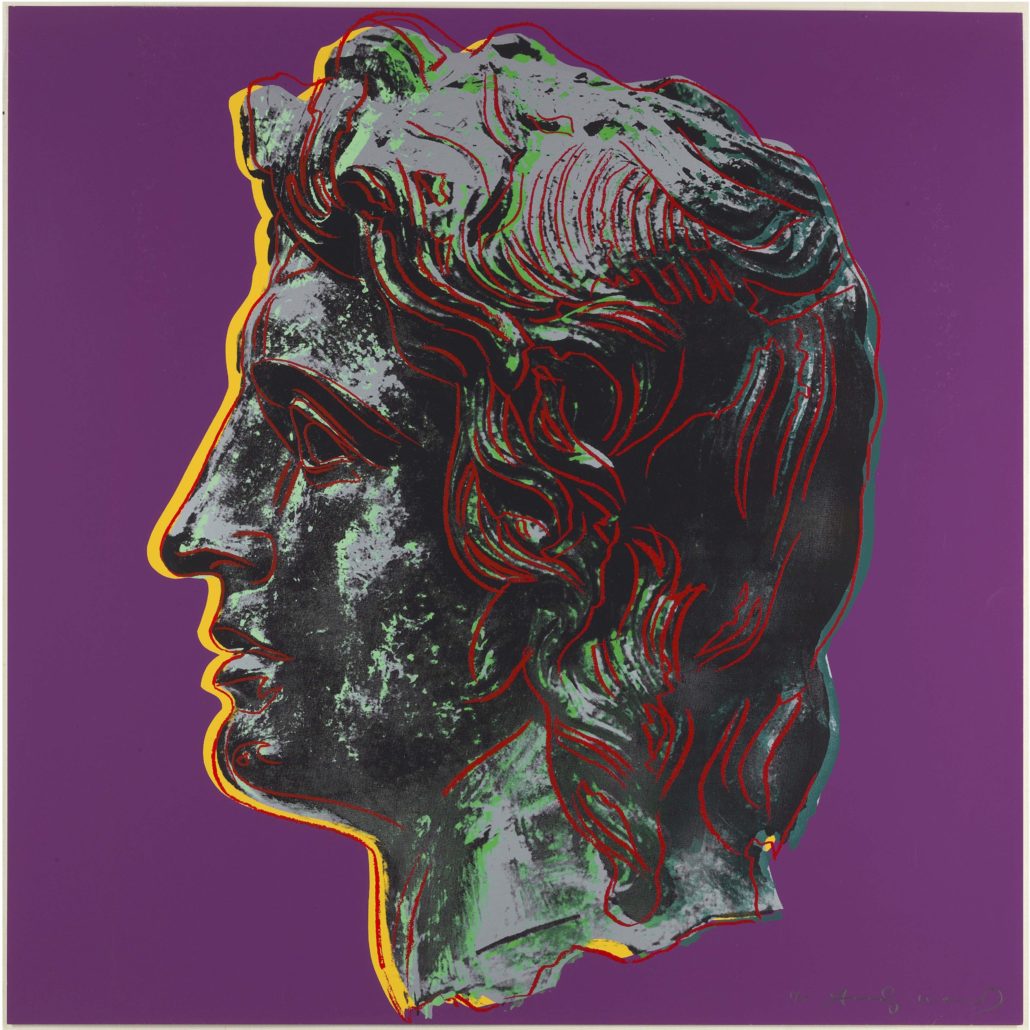
Andy Warhol’s “Alexander the Great” series represents a unique blend of pop art aesthetics with a figure deeply rooted in classical history. The series, created in the early 1980s, is one of Warhol’s more intriguing ventures, combining his signature silkscreen techniques with a reinterpretation of Alexander as a modern-day icon. Warhol’s pop art style, known for its repetitive imagery and bold, commercial appeal, stands in stark contrast to the traditional depictions of Alexander the Great in historical art.
Warhol’s use of bright, flat colors and graphic imagery gave Alexander a modern, almost commercial appeal, much like the way he portrayed celebrities and consumer goods. His works challenge the viewer to rethink how history and modern pop culture intersect.
Why Did Andy Warhol Choose Alexander the Great as a Subject?
Warhol was no stranger to using famous cultural figures in his art. His works featuring celebrities like Marilyn Monroe and Elvis Presley showcased his ability to transform familiar faces into iconic symbols. When it came to Alexander the Great, Warhol’s fascination with iconography was key. Alexander, like Marilyn or Elvis, is a well-known historical figure whose image has become iconic over centuries.
The choice to paint Alexander the Great was not random. Warhol was drawn to the idea of using historical figures in the same way he used modern pop icons. By portraying Alexander, one of history’s most powerful leaders, Warhol created a link between historical heroism and contemporary celebrity culture. Alexander’s enduring presence in popular media, from movies to documentaries, gave Warhol an opportunity to explore the connection between fame and legacy across time.
The Artistry of Warhol’s “Alexander the Great”
Warhol’s approach to art was innovative, and it’s clear that his method of creating the “Alexander the Great” series was no different. Known for his silkscreen printing techniques, Warhol used mass-production methods to reproduce his imagery, giving the artwork a commercial, mass-media feel. The result was a piece that both honored the historical figure and critiqued the commodification of fame.
The color choices in Warhol’s works are particularly significant. His use of vibrant hues to represent Alexander stands in stark contrast to traditional, more somber representations of the king. Warhol’s repetitive use of color and image was central to his philosophy of art as mass media. His use of repetition in these artworks mirrors how Alexander’s image is replicated in modern culture – across films, advertisements, and documentaries.
Warhol’s “Alexander the Great” is not a mere historical painting; it is a commentary on celebrity culture and the way we immortalize figures. By treating Alexander with the same approach Warhol used for his other celebrity portraits, he elevated the ancient king to the level of a pop icon, suggesting that history and fame are often seen through the same lens in modern culture.
The Intersection of History and Pop Culture
Warhol’s art has often been described as a blurring of boundaries between high art and mass culture. His choice of historical figures like Alexander the Great reveals how he saw pop culture as a natural extension of history. By bringing an ancient figure into the world of pop art, Warhol invited viewers to reconsider how they view history.
Alexander the Great, while once an ancient warrior, has taken on a pop culture identity. Films, books, and even video games have kept his name and legacy alive in modern times. Warhol’s work capitalized on this ongoing cultural relevance, placing the conqueror alongside the likes of Marilyn Monroe and Elvis Presley. The juxtaposition of ancient history with modern imagery highlights how history can be continually reshaped in the popular imagination.
Warhol’s portrayal of Alexander was more than just an artistic exercise; it was an invitation to reconsider the way we view icons—not only as historical figures but as enduring cultural symbols. This approach resonates today as we continue to see historical figures reimagined in new, sometimes controversial, ways in art and media.
Public Reception of Warhol’s Alexander the Great Art
When Warhol’s “Alexander the Great” series was first exhibited, it received mixed reactions from critics and the public. Some hailed it as a groundbreaking fusion of pop art and historical subjects, while others questioned whether it was appropriate to treat such a powerful historical figure in such a commercial, modern way.
However, Warhol’s ability to provoke thought through his art cannot be understated. Critics who initially dismissed the series came to appreciate the way it challenged traditional views of art. His ability to turn a historical figure into a pop culture icon proved his mastery of combining deep cultural commentary with visually striking artwork.
Warhol’s “Alexander the Great” and His Legacy in Art
Warhol’s influence on the art world is immeasurable, and his “Alexander the Great” series is no exception. By taking a historical figure and rendering him through the lens of pop art, Warhol opened the door for future artists to explore the intersection of history and popular culture. Artists today continue to draw inspiration from Warhol’s methods of transforming history into art that speaks to contemporary audiences.
The legacy of Warhol’s “Alexander the Great” is also significant because it reflects his larger goal of making art more accessible and relevant to a modern audience. Warhol didn’t just create art for art’s sake—he wanted to bridge the gap between the past and the present, making history feel immediate and alive.
Where Can You View Warhol’s “Alexander the Great” Art?
Warhol’s “Alexander the Great” series continues to be an important piece of pop art history. Various pieces from this collection have been featured in prominent art exhibitions and are housed in museums around the world. For those interested in viewing these works, you can visit galleries such as The Andy Warhol Museum in Pittsburgh or explore exhibitions that feature his work.
If you’re interested in learning more about Warhol’s “Alexander the Great” series or seeing it in person, visit the Hamilton Selway Gallery, which hosts Warhol’s works and provides more context for his exploration of pop culture and historical subjects.
Conclusion
Andy Warhol’s “Alexander the Great” series represents a powerful blending of ancient history with modern pop culture. His ability to reframe a historical figure through the lens of pop art not only redefined Alexander’s place in contemporary culture but also solidified Warhol’s legacy as a revolutionary artist. By treating Alexander as a pop icon, Warhol invited us to see history in a new light, suggesting that icons of the past and present are often viewed through the same lens of fame, media, and cultural significance.
To learn more about Andy Warhol Alexander The Great Series, visit https://hamiltonselway.com/portfolio-item/andy-warhol-alexander-great-ii-291-1982-2/.